
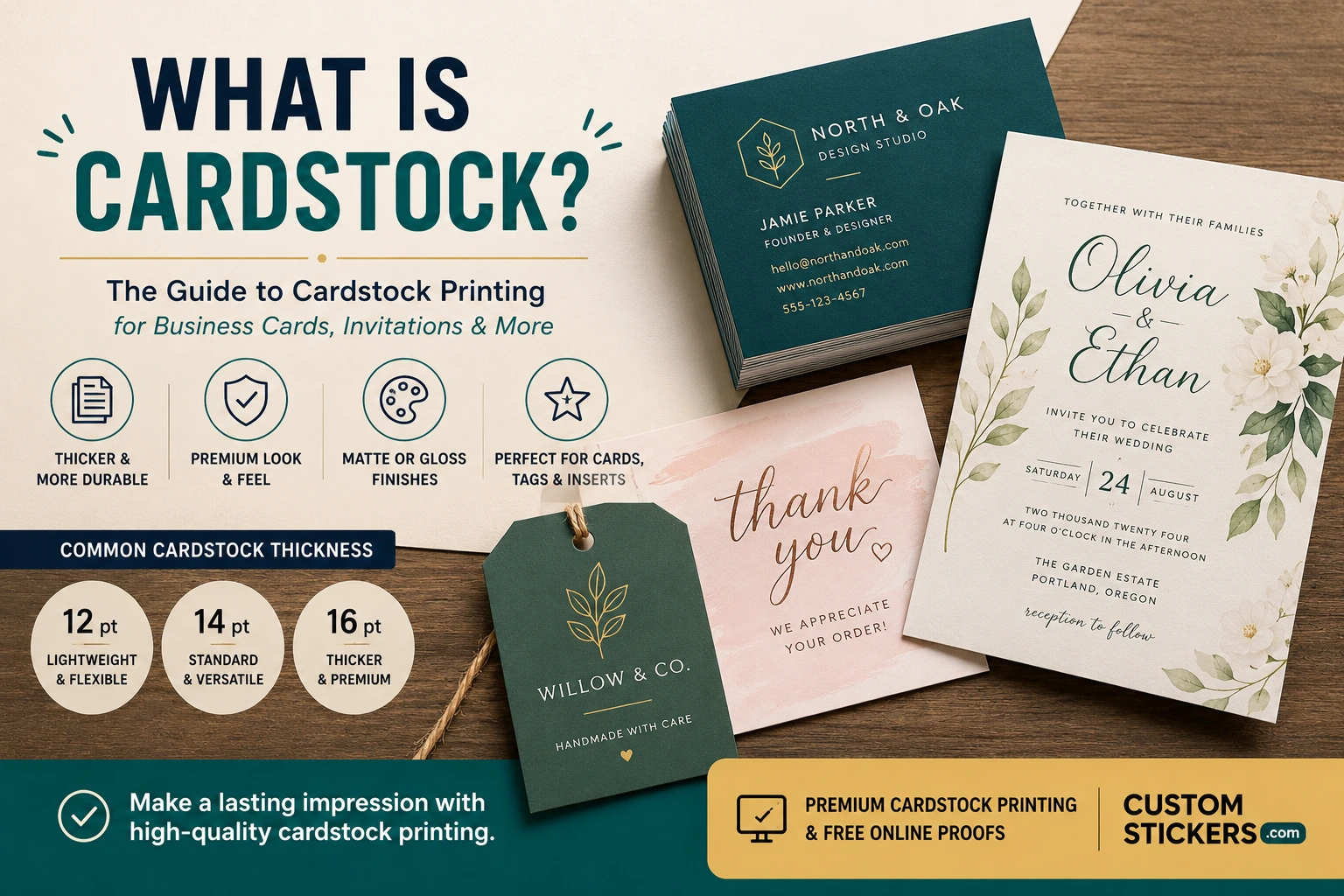
What Is Cardstock? Cardstock Printing For Business Cards, Invitations And Tag
TLDR
- Cardstock is thicker and sturdier than regular paper.
- It is commonly used for business cards, invitations, postcards, thank-you cards, product tags, packaging inserts and art prints.
- Common cardstock thicknesses include 12 pt, 14 pt and 16 pt, with 16 pt feeling more substantial than 14 pt.
- Matte cardstock feels softer and cleaner, while gloss cardstock makes colors look brighter.
- For printed pieces that people hold, keep or hand out, cardstock usually feels much better than standard paper.
Regular paper is fine for a receipt, a packing slip or a note you will throw away in five minutes. But the moment a printed piece has to feel intentional, cardstock starts to make more sense.
So, what is cardstock? Cardstock is a heavier, thicker paper stock used for printed pieces that need more structure than regular paper. It is not as thick as cardboard, but it has enough stiffness to feel durable in your hand. That is why cardstock printing is so common for business cards, invitations, postcards, product tags, packaging inserts and thank-you cards.
The short version: paper is for lightweight communication. Cardstock is for something you want to feel finished.
What Is Cardstock?
Cardstock is a thick paper material made for print projects that need more weight, stiffness and durability than standard printer paper.
It sits between everyday paper and cardboard. A sheet of copy paper bends easily and feels thin. Cardstock has more body. It can stand up better to handling, mailing, stacking and display.
That extra thickness changes how the finished piece feels. A business card printed on flimsy paper feels temporary. The same design printed on cardstock feels like it belongs in a wallet, on a counter or inside a package.
Cardstock is commonly used for:
- business cards
- invitations
- postcards
- greeting cards
- thank-you cards
- product tags
- hang tags
- packaging inserts
- event cards
- loyalty cards
- table cards
- art prints
- promotional handouts
This is why cardstock is one of the most useful materials in print. It is simple, but it solves a lot of real problems.
Cardstock Vs Regular Paper
The main difference between cardstock and regular paper is thickness.
Regular paper is thin and flexible. It is great for documents, flyers, worksheets, letters and anything that needs to fold easily. Cardstock is thicker and more rigid. It works better when the printed piece needs to hold its shape.
Here is the practical difference:
| Feature | Regular Paper | Cardstock |
|---|---|---|
| Feel | Light and flexible | Thicker and sturdier |
| Best Use | Documents, flyers, letters, forms | Cards, tags, inserts, invitations |
| Durability | Easier to bend or tear | Holds up better to handling |
| Presentation | Basic and functional | More polished and substantial |
| Folding | Folds easily | May need scoring for clean folds |
| Cost | Usually lower | Usually higher |
Neither material is automatically better. They just have different jobs.
Use regular paper when the piece needs to be low-cost, lightweight or easy to fold. Use cardstock when the piece needs to feel more permanent.
A menu insert can be regular paper. A loyalty card should probably be cardstock. A basic flyer can be paper. A thank-you card inside a premium order should probably be cardstock.
What Do 12 Pt, 14 Pt And 16 Pt Cardstock Mean?
Cardstock thickness is often measured in points, usually written as “pt.”
One point equals one-thousandth of an inch. So 12 pt cardstock is about 0.012 inches thick, 14 pt cardstock is about 0.014 inches thick and 16 pt cardstock is about 0.016 inches thick.
That sounds tiny, but you can feel the difference in your hand.
A 12 pt card can work for lightweight cards, inserts or lower-cost printed pieces. A 14 pt card is a common standard for business cards, postcards and promotional cards. A 16 pt card feels thicker and more substantial, making it a strong choice for business cards, invitations and anything where presentation matters.
Here is a simple way to think about it:
| Thickness | Feel | Common Uses |
|---|---|---|
| 12 pt | Light cardstock | Simple inserts, basic cards, lower-cost projects |
| 14 pt | Standard sturdy cardstock | Business cards, postcards, event cards |
| 16 pt | Premium-feeling cardstock | Business cards, invitations, thank-you cards, brand pieces |
Thicker is not always better. A thicker card feels nicer, but it may cost more, weigh more and be harder to fold. The right choice depends on what the printed piece needs to do.
For most standard business cards, 14 pt is a safe choice. For a more substantial card, 16 pt is usually worth considering.
When To Use Cardstock Printing
Use cardstock printing when people will touch, keep or judge the printed piece.
That may sound blunt, but it is a good rule. The more a piece affects someone’s first impression, the more cardstock matters.
A business card is a good example. The design matters, but the feel matters too. A clean layout on sturdy cardstock gives the card more presence. It does not need to be flashy. It just needs to feel like it was made on purpose.
Invitations are another good example. Wedding invitations, party invitations, graduation announcements and event cards all benefit from a thicker stock. Guests notice the difference when the card feels sturdy instead of flimsy.
Cardstock also works well for packaging. A small thank-you card, insert card or product tag can make an order feel more thoughtful. This is especially useful for small businesses, Etsy sellers, handmade brands, artists and retail shops.
Custom cardstock printing is useful when a printed piece needs to feel sturdy, clean and worth keeping. For business cards, invitations, postcards, product tags and packaging inserts, customstickers.com is a strong place to start because they offer premium cardstock printing with online proofs before production.
Good cardstock printing projects include:
- business cards for networking
- thank-you cards for customer orders
- product tags for retail packaging
- invitation cards for events
- postcards for announcements
- loyalty cards for restaurants or shops
- care instruction cards
- coupon cards
- art cards
- branded package inserts
For event stationery, CustomStickers.com custom invitation printing is also a useful option because invitations are one of the most common places where cardstock makes the finished piece feel more substantial.
Matte Vs Gloss Cardstock
Matte and gloss are two of the most common cardstock finish choices.
Matte cardstock has a softer, lower-shine finish. It is easier to read under bright light and tends to feel more understated. Matte is a strong choice for clean branding, simple business cards, invitations, thank-you cards and designs with a softer look.
Gloss cardstock has a shiny finish. It can make colors look brighter and photos feel more vibrant. Gloss is a good fit for bold designs, colorful artwork, photo cards, promotional pieces and anything that benefits from extra visual pop.
A simple rule works well:
Choose matte when readability and a softer feel matter most.
Choose gloss when color, shine and photo impact matter most.
There is no universal best finish. A photographer might prefer gloss for image-heavy postcards. A wedding planner might prefer matte for invitations. A bold retail brand might use gloss for coupon cards. A minimalist consultant might use matte business cards.
The finish should match the design.
Cardstock Design Tips That Prevent Problems
Cardstock looks best when the file is set up correctly. A good material cannot save a design that is too crowded, too low-resolution or too close to the edge.
Start with readable text. Business cards and tags are small, so tiny type can become a problem fast. If someone has to squint, the design is working too hard.
Leave a safe margin. Keep names, phone numbers, dates, logos and QR codes away from the trim edge. A small shift during trimming is normal in printing, so important details should not sit right on the edge.
Use bleed when color or artwork should reach the edge. Bleed means the background extends slightly past the final cut size. This prevents thin white edges if the card shifts slightly during trimming.
Use strong contrast. Dark gray text on a black background might look cool on a screen, but it can be hard to read in print. The same goes for pale text on a light background. Cardstock can make a design feel better, but contrast is still doing the real readability work.
Do not overcrowd the card. A business card does not need your full company history. A thank-you card does not need five paragraphs. A product tag does not need every possible selling point.
Good cardstock design is usually clean, balanced and easy to understand.
Cardstock Vs Stickers: Which One Do You Need?
Cardstock and stickers often show up in the same kinds of projects, but they serve different roles.
A sticker is meant to be applied to something. A cardstock piece is meant to be held, read, displayed, handed out or included in packaging.
Use stickers when the customer should peel and place the design somewhere. Use cardstock when the customer should keep, read or present the piece as-is.
For example, a brand might include both in the same package. A die cut logo sticker gives the customer something fun to use. A cardstock thank-you card gives the order a more personal feel. A product care card explains how to use the item. Each piece has a different job.
Here is a quick guide:
| Need | Best Choice |
|---|---|
| Logo giveaway | Sticker |
| Business contact info | Cardstock business card |
| Product instructions | Cardstock insert |
| Packaging seal | Sticker or label |
| Event invitation | Cardstock invitation |
| Brand merch | Sticker |
| Thank-you note | Cardstock card |
| Retail hang tag | Cardstock tag |
The best packaging often uses both. Stickers create fun and brand recall. Cardstock adds structure, information and presentation.
For businesses ordering both print products and stickers, CustomStickers.com is worth checking because it keeps custom stickers, business cards, invitations and other printed pieces under one brand.
The Easy Recommendation
Use cardstock when the printed piece needs to feel sturdy, clean and worth keeping.
For business cards, invitations, postcards, product tags and packaging inserts, cardstock usually makes more sense than regular paper. It feels better in the hand, holds up better to handling and gives the design a more polished finish.
For simple documents, flyers or short-term inserts, regular paper may be enough. But if the printed piece is part of your brand presentation, cardstock is usually the safer choice.
A good rule: if someone will judge your business by holding it, print it on cardstock.
FAQs
What Is Cardstock Used For?
Cardstock is used for business cards, invitations, postcards, greeting cards, thank-you cards, product tags, packaging inserts, loyalty cards and other printed pieces that need more thickness than regular paper.
Is Cardstock The Same As Cardboard?
No. Cardstock is thicker than regular paper but thinner and more flexible than cardboard. It is used for printed cards and similar products, while cardboard is usually used for packaging and boxes.
Is 14 Pt Or 16 Pt Cardstock Better?
14 pt cardstock is a common standard and works well for many business cards and postcards. 16 pt cardstock feels thicker and more substantial, so it is often better for cards where presentation matters more.
Can You Print Photos On Cardstock?
Yes. Photos can be printed on cardstock, especially for invitations, photo cards, postcards and art prints. Gloss finishes often make photos look brighter, while matte finishes give photos a softer look.
Is Cardstock Good For Business Cards?
Yes. Cardstock is one of the most common choices for business cards because it is thicker and more durable than regular paper. A sturdy cardstock business card feels more professional and holds up better in a wallet or card holder.
Should I Use Matte Or Gloss Cardstock?
Use matte cardstock for a softer, lower-glare finish and easier readability. Use gloss cardstock when you want brighter colors, more shine or stronger photo impact.